Mar 6, 2026
5 Mind-Blowing Takeaways from Mastercard's Singapore Innovation Lab
The Future We're Already Living In
Reading Time:
12 Minutes
Category:
Future of Work, AI in Education
The future of commerce is invisible, intelligent, and already here.
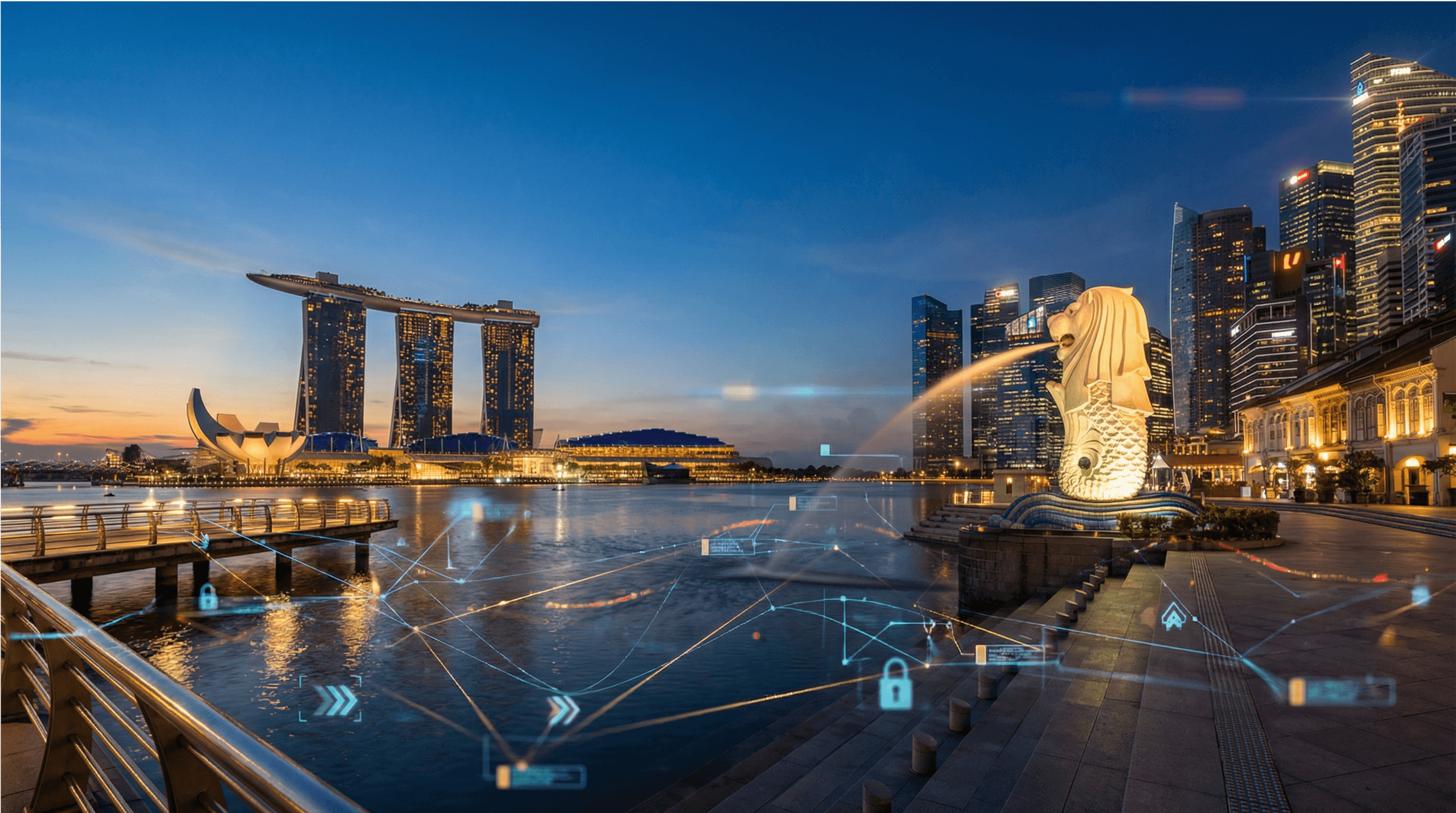
I had never been to Singapore before. And if you have never visited, let me tell you something: nothing quite prepares you for a place that is simultaneously a city, a capital, and a country, all packed into roughly 733 square kilometers.
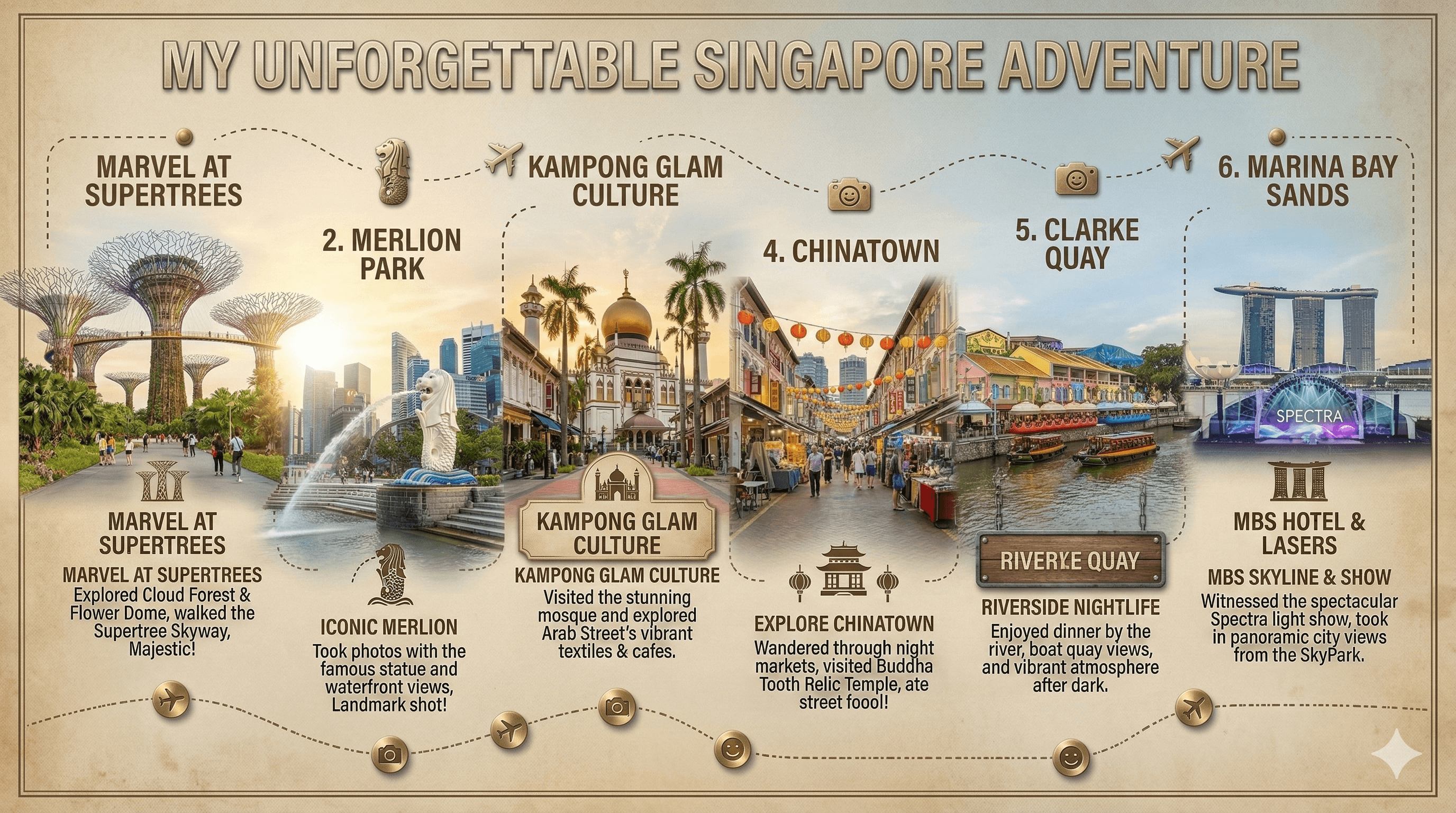
Singapore is one of only three city-states in the world, and despite being among the twenty smallest countries on the planet, it punches so far above its weight that the metaphor barely holds. This is a nation where nearly 30 percent of the urban landscape is covered by greenery, where Changi Airport has been voted the world's best airport six consecutive times, and where over 37,400 international companies have chosen to plant their Asia-Pacific headquarters [1]. It is the third-wealthiest country per capita, behind only Luxembourg and Qatar [2], and its economy is consistently ranked as the most open, most competitive, and most pro-business in the world [3]. Oh, and despite being called the "Lion City," a name derived from the Sanskrit Singapura, there have never actually been any lions here [4]. The Merlion, that iconic half-lion, half-fish statue watching over Marina Bay, is guarding a city that never needed a real lion to be fierce.
But I did not travel to Singapore for the sightseeing, as stunning as it is. I came because I was invited to something extraordinary: an exclusive gathering called Threads of Legacy, organized by Val Quay and friends. Val is the co-founder of Aevitas Perpetual and Threads of Legacy, and she is the kind of person who defies easy categorization. She holds an eMBA from MIT, has spent her career spanning law, management consulting, and corporate finance, and is driven by a belief that capital, whether financial, relational, or social, should serve people [5]. The event she curated was visionary in the truest sense of the word. It was not a conference in the traditional sense, not a room full of name badges and recycled talking points. It was a carefully assembled gathering of minds and hearts, designed to spark the kind of conversations that change how you see the world. And it did. It was, without exaggeration, truly life-changing.
One of the highlights of the trip, and the experience I want to spend the most time unpacking here, was a visit to the Mastercard headquarters in Singapore to experience their immersive Innovation Lab, known as the Mastercard Experience Center. This is one of only six such centers globally, with others in London, Stockholm, Dubai, Mexico City, and New York City [6]. The Singapore facility serves as a regional Asia-Pacific hub where Mastercard conducts customer workshops, executive roundtables, and what they call Innovation Circuits: half-day immersive sessions that walk participants through the exponential technologies reshaping commerce, from virtual reality to artificial intelligence [6]. As Sandeep Malhotra, Mastercard's Executive Vice President of Products and Innovation for Asia Pacific, has described it: "The Mastercard Experience Center is designed as a portal to that future, a place where customers and partners can virtually experience that future today, and where we're only limited by the power of our collective imaginations" [6].
What I experienced inside that lab was not a PowerPoint presentation about the future. It was the future, rendered in real time, projected on immersive curved screens, and made tangible through interactive demonstrations. The Innovation Circuit 2026 session walked us through the entire arc of human commerce, from the earliest barter exchanges to the borderless, tokenized, AI-powered ecosystems already taking shape. And what I saw there has fundamentally reshaped how I think about retail, payments, data, and the role of trust in a world that moves faster than most of us realize.
Let me walk you through what I learned.
A Few Thousand Years in Sixty Minutes: The Arc of Commerce
The session opened with a sweeping timeline titled "From Barter to Borderless: Thousands of Years of Commerce Evolution." The premise was elegant and humbling: from trading shells to streaming tokens, human exchange has always been shaped by the tools of its time, and today, technology is rewriting the rules of global commerce.
The timeline traced the milestones that most of us learned in school, but rarely connect into a single narrative. Barter systems in the Stone Age. Bronze replicas were used as currency in China around 1,100 BC. The invention of coins in Lydia around 600 BC. The Silk Route connecting Asia to Europe around 200 BC. Paper notes emerged in China around 1100 AD. Then the pace accelerates: the first credit card introduced by McNamara in 1950, the birth of artificial intelligence as a field when John McCarthy coined the term in 1956, electronic data interchange pioneered by Ed Guilbert in the 1960s, encrypted data on the internet in the 1990s, cloud-based solutions and the rise of ERPs and CRMs in the 2000s, payment tokens introduced by Trust Commerce in 2001, and the era of interconnected business through APIs beginning around 2010.
What struck me was not the individual milestones, most of which are familiar, but the acceleration. It took thousands of years to move from barter to coins. It took centuries to move from coins to paper. It took decades to move from paper to digital. And now, the intervals between paradigm shifts are measured in years, sometimes months. The message was clear: the pace of change is not slowing down. It is compounding.
The Three Spheres: A Framework for Understanding What Comes Next
Mastercard's Innovation Circuit organized the future of commerce around three interconnected spheres, each representing a fundamental layer of the emerging economy. This framework is worth understanding because it does not just describe technology; it describes the architecture of how value will be created, exchanged, and protected in the years ahead.
Sphere | Focus | Core Principles | Enabling Technology |
Sphere of Transactions | Building seamless, inclusive, and trusted payments | Choice, Dynamism, Interoperability | Tokenization |
Sphere of Networks | Engineering hyperconnected, embedded ecosystems | Reach, Access, Empowerment | APIs (Application Programming Interfaces) |
Sphere of Data | Powering adaptive, autonomous, and personalized experiences | Informed, Perceptive, Proactive | Artificial Intelligence |
These three spheres are not operating in isolation. They are converging, and the companies that understand how to orchestrate all three simultaneously are the ones that will define the next era of commerce.
The Sphere of Transactions: Tokenization Is Rewriting the Rules of Loyalty
The first deep dive was into the Sphere of Transactions, and the central insight was this: tokenization is not just about securing payments anymore. It is revolutionizing entire loyalty ecosystems, unlocking real-time, hyper-personalized engagement across industries.
Consider the numbers. More than 65 percent of retail and hospitality revenue comes from repeat customers, making loyalty systems a critical driver of sustained growth. The global loyalty management market is projected to reach $59 billion by 2030, fueled by tokenized systems that track real-time guest behaviors, enabling hyper-personalized offers and dynamic rewards [7]. This is not an incremental improvement. This is a fundamental reimagining of what loyalty means in a digital-first world.
When we think about loyalty programs, most of us still picture punch cards or airline miles. But tokenization enables something far more sophisticated: a system where every interaction, every purchase, every preference is captured in real time and translated into personalized value. The loyalty program of the future does not just reward you for what you bought yesterday. It anticipates what you will want tomorrow.
The Sphere of Networks: The Invisible Infrastructure Powering Everything
The second sphere focused on APIs, the application programming interfaces that most consumers never see but that power virtually every digital transaction they make. As the presentation put it: APIs are the quiet connectors behind every tap, swipe, and embedded checkout, shaping a world where payments are instant, intelligent, and invisible.
The projections are staggering. Over $7 trillion in payments is expected to flow through embedded channels by 2030, according to industry research by Bain and Company and others [8]. Seven in ten consumers globally will rely on digital payments powered by real-time API processing, including authentication and settlement happening instantaneously.
But it is not just consumer payments that are being transformed. The presentation highlighted how commercial spend is going virtual. From embedded expense platforms to AI-driven procurement, virtual cards are reshaping how businesses manage, track, and optimize corporate spend globally. By 2030, $1.1 trillion in payments will run through virtual cards, a figure larger than the GDP of most countries [9]. Already, 4 billion cards are embedded across platforms like Apple Pay, Google Pay, and corporate payment systems.
What this means in practice is that the infrastructure of commerce is becoming invisible. You will not see the API that authenticates your payment. You will not notice the virtual card that processes your company's procurement order. But these invisible systems will be the backbone of a global economy that operates at a speed and scale we have never seen before.
The Sphere of Data: When AI Meets the Data Explosion
The third sphere was perhaps the most mind-bending. The presentation opened with a simple but staggering fact: 402 million terabytes of data are created every single day. In 2024 alone, 147 zettabytes of data were created, compared to just 2 zettabytes in 2010. That is not a gradual increase. That is an explosion, and AI is both the fuel and the engine.
The vision presented was one of real-time data, supercharged by AI, powering adaptive, hyper-personalized experiences that redefine what is possible in commerce today and lay the groundwork for next-generation quantum-driven intelligence.
Real-Time Data Plus AI Equals Exponential Customer Value
By fusing real-time data and AI, businesses are transforming customer experiences, optimizing every touchpoint, reducing churn, and driving exponential value. The AI-driven customer experience market is projected to reach $1.8 trillion, nearly six times its current size, reshaping how companies engage and serve their customers [10]. Netflix, often cited as the gold standard of AI-powered personalization, has saved over $1 billion annually through its recommendation algorithms, cutting churn and maximizing content value [11].
Gen AI Plus Autonomous Commerce Equals Self-Driving Commerce
One of the most provocative segments of the presentation was titled "Gen AI + Autonomous Commerce = Self-Driving Commerce." The core argument: AI is moving beyond insights to action, reshaping how commerce runs itself, from decisions to delivery. By 2030, 20 percent of customer interactions are expected to be handled by AI agents or autonomous systems. The examples cited were not science fiction: AI negotiating B2B contracts, autonomous supply chains, predictive fraud detection, and hyper-dynamic pricing.
But the presentation was careful to note the human dimension of this shift. Businesses will need new governance models to balance automation, trust, and human oversight. The technology is advancing faster than the frameworks we have to manage it, and that gap represents both a risk and an opportunity.
Hyper-Personalization: The Convergence of AI, Big Data, and Behavioral Science
The final data-focused segment brought together three powerful forces: AI, big data, and behavioral science. The argument was compelling: by combining these three disciplines, businesses are not just meeting customer needs. They are anticipating them, creating loyalty through hyper-personalization.
The numbers tell the story. 91 percent of consumers now favor hyper-personalized experiences, and 89 percent of digital businesses are investing heavily in delivering them [12]. Companies like Microsoft, Netflix, Nike, and Cadbury were highlighted as leaders in this space, each using the convergence of data and AI to create experiences that feel less like transactions and more like relationships.
This is where the future of retail gets genuinely exciting, and genuinely challenging. Hyper-personalization at scale requires not just technology but wisdom. It requires understanding the difference between knowing what a customer wants and respecting who they are. The companies that get this balance right will earn loyalty that no discount or promotion could ever buy.
A Glimpse of Tomorrow: Long-Range Contactless Payments and the Circular Economy
Two demonstrations during the Innovation Circuit brought the abstract into the tangible.
The first was a demonstration of long-range contactless payments, a technology that allows transactions to be completed from anywhere in a store, eliminating queues entirely. Imagine walking into a shop, selecting what you need, and simply walking out, your Mastercard completing the payment seamlessly in the background. The demonstration showed a successful payment notification: "Payment successful. Feel free to head out with your purchased item." No lines. No checkout counters. No friction.
The second was the Pentatonic Circular E-commerce Dashboard, which illustrated a future where sustainability is not just a corporate talking point but a measurable, profitable business model. The dashboard tracked a circular loyalty loop: consumers purchase products, trade them in, and receive rewards. The traded-in products are then recycled, refurbished, or repaired. The numbers were impressive: resale revenue exceeding $444,000, profit margins above 21 percent, over 54,000 processed items, and environmental savings of nearly 4,900 tons of CO2 and 330 tons of waste reduced. This is not charity. This is a business model where doing good and doing well are the same thing.
The Five Key Takeaways: Where Commerce Is Heading
The Innovation Circuit concluded with five key takeaways that I believe every business leader, entrepreneur, and professional should internalize. These are not predictions. They are imperatives.
First, reinvention is no longer optional; it is survival. From stone to smart, commerce has always been a story of constant reinvention, each chapter reshaped by innovations that transform how we exchange value. The companies that treat innovation as a side project rather than a core function will not survive the next decade.
Second, the edge belongs to those who master the invisible ecosystems. Winning companies are the ones that orchestrate data, networks, and transactions into intelligent, adaptive systems that amplify value and create competitive advantage. The visible product or storefront is just the tip of the iceberg. The real competitive moat is the invisible infrastructure underneath.
Third, trust will define the next generation of growth. Trust is the ultimate currency. Every breach, every bias, every blind spot can erode your advantage overnight and fracture customer loyalty. In a world where AI handles more decisions and data flows more freely, the companies that earn and protect trust will be the ones that endure.
Fourth, disruptive technologies will rewrite the rules. As quantum computing challenges today's encryption and autonomous systems reshape decision-making, the advancement of these technologies will fundamentally transform how businesses operate and compete. The rules that govern commerce today will not be the rules that govern it tomorrow.
Fifth, speed will outrun scale. Slow movers will be outpaced, not just outgrown. In the next era, success belongs to those who operate at the speed of innovation, outpacing competitors through bold adaptation and rapid experimentation. Size alone will not protect you. Agility will.
What This Means for All of Us
I walked out of the Mastercard Experience Center in Singapore with a head full of data and a heart full of conviction. The future of commerce is not some distant horizon. It is here, being built right now, in labs and boardrooms and code repositories around the world.
But what stayed with me most was not the technology itself. It was the human question underneath all of it. As we build systems that are faster, smarter, and more autonomous, are we also building systems that are more just, more inclusive, and more worthy of the trust we place in them?
The Innovation Circuit's framework of three spheres, transactions, networks, and data, is ultimately a framework about human connection. Transactions are how we exchange value with each other. Networks are how we reach each other. Data is how we understand each other. The technology is the enabler, but the purpose is profoundly human.
Singapore, with its extraordinary blend of tradition and innovation, its relentless pursuit of excellence, and its position as a global crossroads, felt like exactly the right place to have this experience. And the Threads of Legacy gathering, with its emphasis on purposeful living and intentional stewardship, provided the perfect frame for thinking about what kind of future we want to build, not just what kind of future we can build.
The questions I am left with, and I want to leave with you, is this: In a world where commerce is becoming borderless, invisible, and autonomous, what will you do to ensure that the systems we build serve not just efficiency, but humanity? What will this do to our already widening gap between developing and developed nations? How is this going to shape education and the education world? Will it?
For more pertinent information on AI-based learning systems, get the Neogogy book: https://a.co/d/00yk4sQC
References
[1]: Singapore Economic Development Board, "Why Singapore," https://www.edb.gov.sg
[2]: Hyper Island, "53 Facts About Singapore," https://knowledge.hyperisland.com/53factsaboutsingapore
[3]: Wikipedia, "Economy of Singapore," https://en.wikipedia.org/wiki/Economy_of_Singapore
[4]: Rustic Pathways, "8 Fun Facts About Singapore," https://rusticpathways.com/blog/fun-facts-about-singapore
[5]: N5 Stewardship Conference, "Val Quay — Speaker Profile," https://n5stewards.asia/speaker/val-quay
[6]: Mastercard Newsroom, "Mastercard Experience Center Brings the Future of Commerce to Life," July 28, 2023, https://www.mastercard.com/news/ap/en/newsroom/press-releases/en/2023/mastercard-experience-center-brings-the-future-of-commerce-to-life/
[7]: Verified Market Research via PR Newswire, "Loyalty Management Market Size Worth USD 59.49 Billion, Globally, by 2030," September 20, 2023, https://www.prnewswire.com/news-releases/loyalty-management-market-size-worth-usd-59-49-billion-globally-by-2030-at-15-24-cagr-verified-market-research-301933232.html
[8]: PR Newswire / RevitPay, "Embedded Finance to Process Over $7 Trillion in Transactions by 2030," January 15, 2026, https://www.prnewswire.com/news-releases/embedded-finance-to-process-over-7-trillion-in-transactions-by-2030-revitpay-reports-302662444.html
[9]: Juniper Research via FinTech News, "B2B Payments to Reach $224 Trillion by 2030, Virtual Cards Lead," September 23, 2025, https://fintechnews.ch/payments/b2b-payments-virtual-cards-2030/78332/
[10]: Grand View Research via AI Magazine, "AI Market to Hit US$1.8tn by 2030," July 4, 2023, https://aimagazine.com/articles/grand-view-research-ai-market-to-hit-us-1-811-75bn-by-2030
[11]: Reruption, "Netflix's ML Recs: 80% Views Personalized, $1B Saved," https://reruption.com/en/knowledge/industry-cases/netflixs-ml-recs-80-views-personalized-1b-saved
[12]: Envive AI, "31 Personalized Shopping Experience Statistics That Prove AI," https://www.envive.ai/post/personalized-shopping-experience-statistics